The Shaft Forge Process: What Makes It Vital?
In the relentless environments of mining, energy, and heavy machinery, component failure carries monumental costs—from catastrophic downtime to critical safety hazards. The backbone of this mechanical world is often a single, pivotal component: the shaft. Yet, not all shafts are created equal. The distinction between adequate and exceptional lies in its very creation. This brings us to the core question: What makes the Shaft Forge process so vital? The answer is found in a fusion of ancient metallurgical art and modern precision engineering, delivering unyielding performance where it matters most.
1.What is Shaft Forging? The Core of Metallurgical Transformation
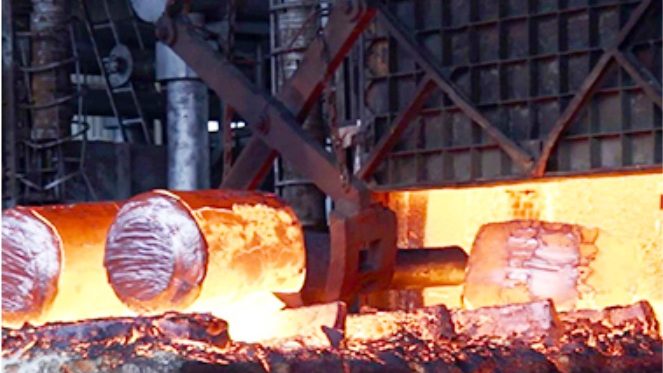
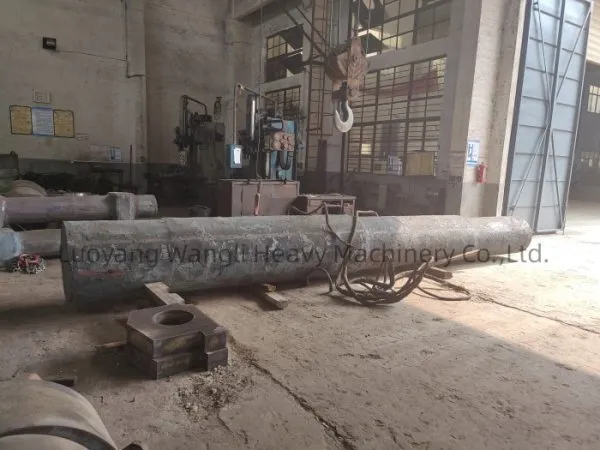
Shaft Forging is a definitive manufacturing process that shapes and enhances metal through localized compressive forces. It transcends simple molding; it is a strategic re-engineering of metal’s internal architecture. A heated alloy steel billet is meticulously deformed under immense pressure from a forge press or hammer. This controlled plastic deformation refines the metal’s coarse, as-cast grain structure into a fine, directional grain flow that faithfully follows the final contour of the forged shaft. This seamless, fibrous grain pattern is the fundamental source of its superior mechanical properties, eliminating the isotropic weaknesses inherent in cast or machined-from-bar stock alternatives. In essence, a Shaft Forge doesn’t just make a part—it rebuilds the metal from the inside out for a singular purpose: to bear immense stress.
2.The Unrivaled Advantages: Why Forging is Non-Negotiable
Choosing a forged shaft is a strategic decision for reliability. The Shaft Forge process imparts a suite of advantages that directly counter the brutal forces in industrial applications.
2.1.Supreme Strength & Fatigue Life:
The engineered grain flow provides exceptional resistance to impact and cyclic loading. In a wind turbine gearbox or a mining crusher, where loads reverse direction millions of times, a forged shaft dramatically inhibits crack initiation and propagation, ensuring unparalleled service life and safety.
2.2.Peerless Structural Integrity:
The forging process consolidates the metal, healing voids and porosity to create a homogeneous, dense structure. This results in consistent mechanical properties throughout the entire shaft, ensuring predictable performance, superior metallurgical soundness, and enhanced structural reliability.
2.3.Exceptional Economic Value & Longevity:
While the initial investment for a Shaft Forge component is often higher, its total cost of ownership is significantly lower. The dramatic reduction in unplanned downtime, fewer catastrophic failures, and extended maintenance intervals translate into profound operational savings and continuous productivity for power plants, oil rigs, and heavy manufacturing facilities.
3.A Closer Look: The Precision Stages of Shaft Forging
The journey of creating a premium forged shaft is a multi-stage symphony of heat, force, and precision machining.
3.1.Advanced Material Selection & Preparation:
The process begins with stringent selection of high-grade alloy steels, chosen for specific yield strength, toughness, and environmental resistance. The billet is then uniformly heated in a controlled furnace to a precise forging temperature, ensuring optimal plasticity for deformation.
3.2.Precision Die Forging & Forming:
The heart of the Shaft Forge process. The heated billet is placed into precision-engineered dies and shaped under colossal pressure from a hydraulic or mechanical press. This stage is where the critical grain flow is meticulously aligned to the shaft’s geometry, creating a near-net-shape blank of exceptional strength.
3.3.Controlled Heat Treatment (Quenching & Tempering):
Following forging, the component undergoes tailored thermal cycling. Quenching rapidly cools the steel to achieve high hardness, followed by tempering to relieve internal stresses and restore ductility. This achieves the perfect synergy of hardness, core strength, and fracture toughness.
3.4.Sophisticated Machining & Finishing:
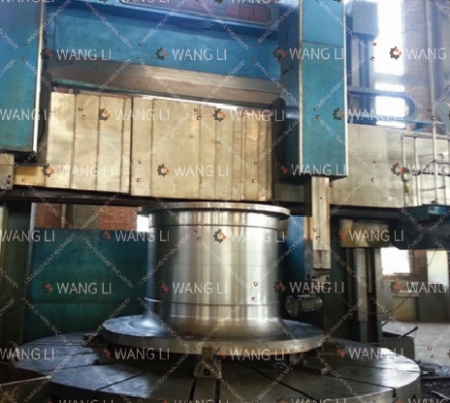
The forged and heat-treated blank is transformed into a finished component through advanced CNC machining. Processes like turning, deep-hole drilling, grinding, and spline milling are employed to achieve micron-level tolerances on bearing journals, flanges, and keyways, resulting in a ready-to-install forged shaft of exact specification.
4.Engineered for Extremes: Key Applications of Forged Shafts
The robustness of a Shaft Forge product makes it the mandatory choice for the most demanding power transmission roles. The following table outlines its critical applications across core industries:
| Industry Sector | Primary Shaft Forge Applications | Critical Performance Demand |
| Mining & Aggregate | Crusher/Eccentric Main Shafts, Ball & SAG Mill Trunnions, Heavy-Duty Conveyor Drive Shafts | Extreme Shock Load Resistance, Abrasive Wear Survival, High Torque Capacity |
| Oil, Gas & Petrochemical | Centrifugal Pump Shafts, Drilling Equipment Spindles (Rotary Table/Kelly), Compressor Rotor Shafts | High Torsional & Cyclic Stress Resistance, Corrosion/Fatigue Resistance in Harsh Environments |
| Power Generation | Steam & Gas Turbine Rotor Shafts, Generator Rotors, Feedwater Pump Shafts (Thermal/Nuclear) | Long-Term Integrity under High Temperatures & Centrifugal Forces, Premium Metallurgical Purity |
| Wind Energy | Main Rotor Shafts (Low-Speed), Gearbox Intermediate & High-Speed Shafts, Yaw/ Pitch Drive Shafts | Ultimate Bending & Torsional Fatigue Resistance for Highly Variable, Unpredictable Loading |
| Heavy Marine & Rail | Propulsion System Transmission Shafts, Locomotive Traction Motor & Axle Shafts | Combination of High Torque, Bending Loads, and Resistance to Environmental Degradation |
5.Deep Dive: Addressing Technical Queries on Shaft Forging
Q: For a critical application, why is a forged shaft superior to a cast or fabricated/welded shaft?
A: This is central to understanding the Shaft Forge value proposition. Castings can suffer from hidden defects like shrinkage cavities or inconsistent grain structure, creating unpredictable failure points. Fabricated shafts, welded from separate pieces, introduce heat-affected zones (HAZs) that are microstructurally different and often weaker. A forged shaft, by contrast, is a monolithic piece with continuous, optimized grain flow, offering predictable, anisotropic strength aligned with the primary stress directions, making it fundamentally more reliable for severe service.
Q: How does the forging process accommodate complex design requirements?
A: Modern Shaft Forge operations utilize sophisticated CAD/CAM and finite element analysis (FEA) to design precision dies that can produce highly complex, near-net shapes. This includes integral flanges, collars, and strategic mass distribution. This capability minimizes wasteful machining, preserves the beneficial grain flow, and allows for the production of forged shafts that are both geometrically sophisticated and structurally optimal.
Q: What about material flexibility and future innovations?
A: The Shaft Forge process is highly adaptable to a vast metallurgical portfolio, from standard carbon steels to advanced nickel-based superalloys and corrosion-resistant alloys (CRAs). This allows for precise matching of material properties to application-specific challenges like sour gas service (H2S resistance) or high-temperature creep. Innovation continues with isothermal forging for aerospace-grade precision and the integration of real-time process monitoring for flawless quality assurance.
6.Conclusion: Forging the Indispensable Backbone of Industry
The vitality of the Shaft Forge process is ultimately measured in decades of uninterrupted operation, in megawatts of consistently generated power, and in the safety of monumental machinery. It is a deliberate manufacturing choice that prioritizes lifelong integrity over short-term cost. In an era pushing mechanical and environmental limits—from deeper mines to larger wind turbines—the forged shaft is not merely a component; it is a testament to engineering foresight. It represents a commitment to building the resilient, trustworthy foundation upon which global industry pivots. When failure is not an option, the specification is clear: a precision-engineered forged shaft.
Feel free to contact us for more information or assistance.